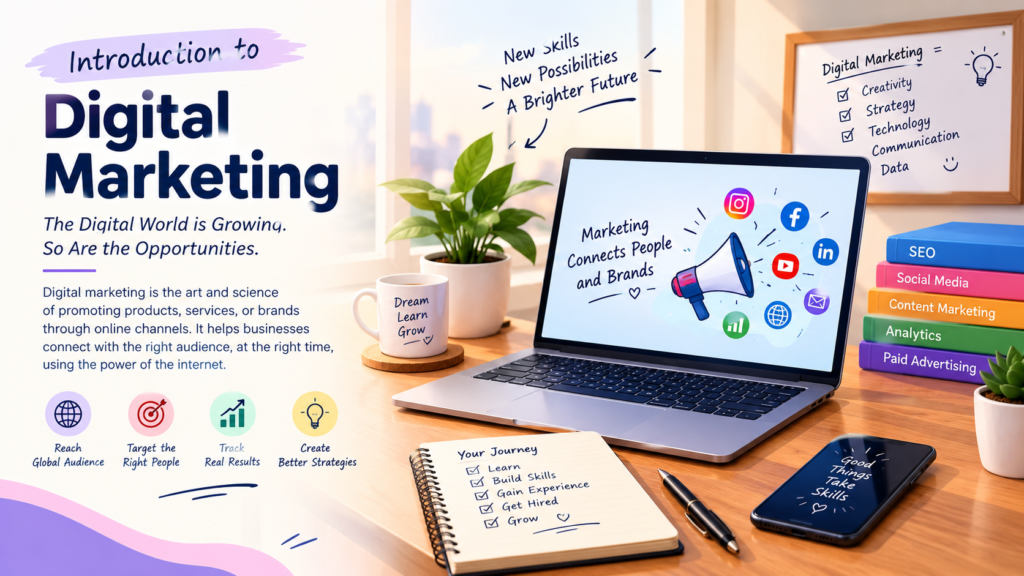
The internet has changed the way people communicate, shop, learn, and make decisions. Today, businesses need more than a physical store or traditional advertising to connect with customers. They need a strong online presence. This growing dependence on digital platforms has created a high demand for people who understand how online marketing works.
Digital marketing has become an exciting career choice for students, freshers, entrepreneurs, and professionals. It combines creativity, communication, technology, strategy, and data. A person interested in writing, social media, advertising, websites, or business can find different career paths within this field.
This article explains the important skills required for a digital marketing career, learning opportunities, and the different job roles available in this growing industry.
Understanding Digital Marketing
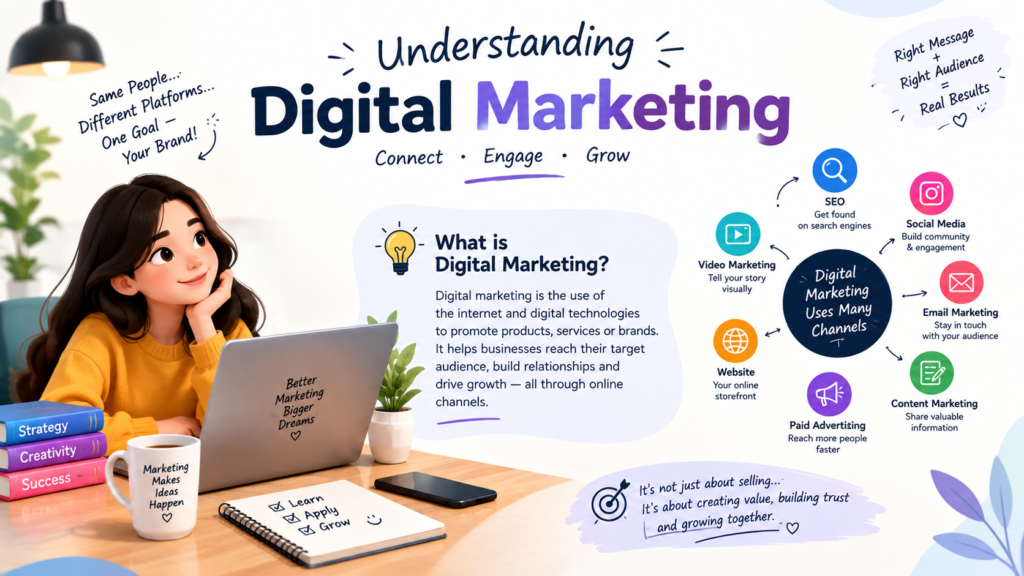
Digital marketing refers to the promotion of products, services, or brands through online and digital channels. Businesses use websites, search engines, social media platforms, email, online advertisements, and other digital tools to reach potential customers. Unlike traditional marketing, digital marketing allows businesses to interact with specific audiences and measure campaign performance.
For example, a company can discover how many people visited its website, clicked on an advertisement, watched a video, or completed a purchase.
This ability to track results makes digital marketing valuable for modern businesses. Companies can study customer behavior and improve their marketing strategies based on real information.
Digital marketing offers a wide variety of career possibilities. Almost every industry now uses digital platforms to communicate with customers. Educational institutions, online stores, healthcare organizations, technology companies, restaurants, fashion brands, and small businesses all require some form of digital marketing.One important advantage of this career is flexibility. Digital marketing professionals can work in companies, advertising agencies, startups, or as independent freelancers. Some roles also provide remote working opportunities.Another advantage is that beginners can start learning without needing extensive technical knowledge. With proper training and regular practice, students can gradually develop professional skills.Digital marketing also offers opportunities for continuous growth. As technology changes, new platforms and tools continue to create new career possibilities.
Essential Skills for a Digital Marketing Career
A successful digital marketer needs a combination of creative and practical skills. Some of the most important skills are discussed below.
Search Engine Optimization, commonly known as SEO, focuses on improving the visibility of websites in search engine results
SEO professionals work with keywords, website content, page structure, user experience, and other optimization techniques. The main objective is to help relevant audiences discover a website through search engines.
Learning SEO can be valuable because businesses want to attract visitors naturally through search results.
Content plays an important role in online marketing. Businesses use articles, blogs, website pages, videos, social media posts, and other forms of content to communicate with their audience.
A digital marketer should understand how to create useful and engaging content. Good writing skills can help professionals explain ideas clearly and build trust with potential customers.
Content should focus on the needs and interests of the audience rather than only promoting a product.
Social media has become an important communication channel for businesses. Brands use social platforms to share information, introduce products, interact with customers, and develop a recognizable identity.
A social media professional needs to understand content planning, audience engagement, trends, campaign ideas, and performance measurement.
Creativity and consistency are especially important when managing social media accounts.
Online advertising allows businesses to reach selected audiences through paid campaigns. Advertisements can be created for search engines, social media platforms, websites, and other digital spaces.
Professionals working in paid advertising need to understand campaign goals, audience targeting, budgets, advertisements, and performance analysis.
A successful campaign is not simply about spending money. It requires planning, testing, and continuous improvement.
Email marketing helps businesses communicate directly with customers. Organizations use emails to share updates, useful information, offers, and product announcements.
A professional working in email marketing should understand how to create relevant messages and organize campaigns for different audiences.
Effective email communication can help businesses maintain long-term relationships with customers.
Digital marketing involves more than creative ideas. Data is also important for understanding whether a marketing strategy is successful.
Professionals should learn how to analyze website visitors, audience engagement, campaign performance, and customer actions.
Basic analytical thinking helps marketers identify what is working and what needs improvement.
Digital marketers often work with clients, designers, developers, writers, and business teams. Therefore, clear communication is an important skill.
A professional should be able to explain ideas, understand customer needs, and present information effectively.
Strong communication also helps when creating content and building relationships with clients or audiences.
There are many ways to learn digital marketing. Beginners can start with introductory courses and gradually move toward advanced topics.
A complete learning program may include subjects such as SEO, content marketing, social media marketing, email marketing, online advertising, analytics, and digital strategy.
However, completing a course alone is not enough. Digital marketing is a practical field, so learners should apply their knowledge.
For example, a beginner can create a small blog, design a social media page, or develop a simple website. These projects provide practical experience and help learners understand how different marketing techniques work.
Certificates can demonstrate that a person has completed a training program, but practical skills and real projects can make a stronger impression when applying for jobs.
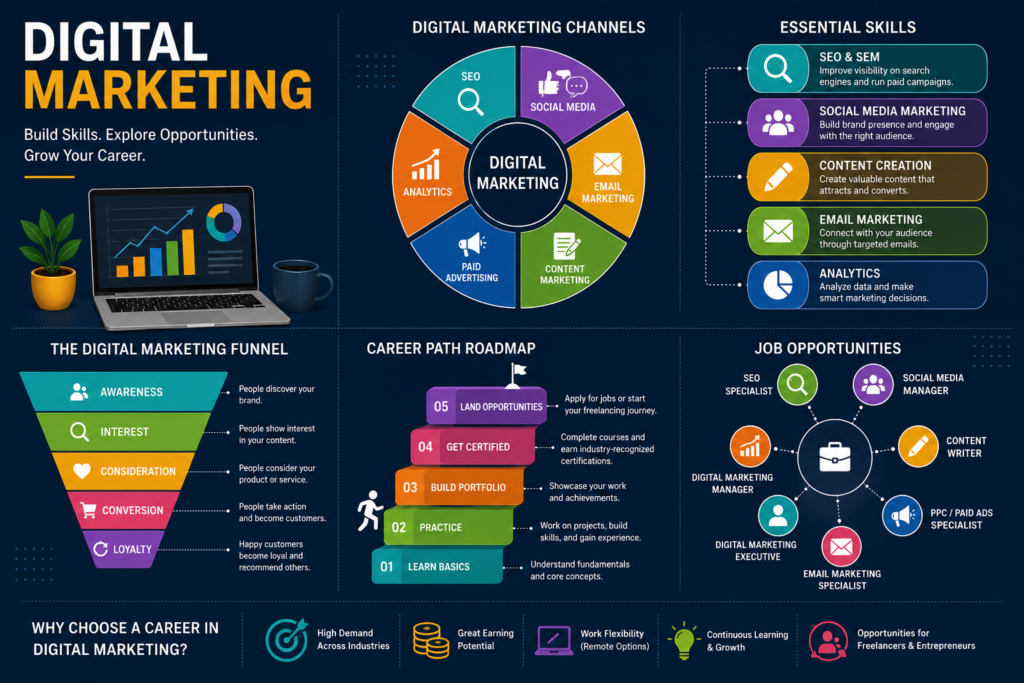
Digital marketing includes many specialized job roles.
Some popular opportunities include the following.
A Digital Marketing Executive supports online marketing activities and may work on campaigns, content, social media, SEO, and other digital channels.
This role is often suitable for beginners who want experience in different areas.
An SEO Specialist focuses on improving website visibility in search results. The role may involve keyword research, content optimization, website analysis, and monitoring search performance.
A Social Media Manager plans and manages a brand's presence on social platforms. Their responsibilities may include creating content plans, publishing posts, responding to audiences, and analyzing engagement.
Content Writers create written material for websites and digital platforms. Their work may include blog articles, website pages, product descriptions, and marketing content.
A Paid Advertising Specialist manages online advertising campaigns. They work with campaign planning, audience targeting, budgets, and performance tracking.
An Email Marketing Specialist creates and manages email campaigns designed to communicate with customers and support business goals.
A Digital Marketing Manager usually has experience in multiple areas of online marketing. This professional may plan strategies, manage campaigns, coordinate teams, and monitor marketing performance.
Digital marketing can also provide opportunities for freelancers. Independent professionals can offer services to businesses without working as full-time employees.
Popular freelance services include content writing, SEO, social media management, advertising support, and email marketing.
To start freelancing, it is important to develop strong skills and create a portfolio. A portfolio can include personal projects, sample work, websites, campaigns, or other examples that demonstrate professional abilities.
Good communication and reliability are also important when working with clients.
Starting a digital marketing career can be done step by step.First, understand the basic concepts of online marketing. Learn how websites, search engines, social media, content, and advertising work.
Next, identify your interests. You do not need to become an expert in every area immediately.
You can begin with one or two skills and gradually expand your knowledge.
Practice is extremely important. Create your own project where you can experiment with digital marketing techniques.
This could be a blog, portfolio website, or social media page.
After gaining experience, prepare a professional portfolio and resume. Show the projects you have worked on and explain the skills you have developed.
Finally, continue learning. Digital marketing changes quickly, so professionals should remain curious about new tools, technologies, and marketing methods.
A career in digital marketing can offer exciting opportunities for people with different interests and abilities. It is a field that combines creativity with strategy and practical skills with technology.
Students and beginners can start by learning fundamental concepts and practicing them through small projects. Skills such as SEO, content creation, social media marketing, paid advertising, email marketing, and analytics can open different career paths.Courses can provide knowledge, but practical experience is equally important. Building projects, developing a portfolio, and continuously improving skills can help individuals become more confident professionals.
Whether someone wants to work for a company, join a marketing agency, become a freelancer, or promote their own business, digital marketing provides many possibilities. With patience, regular practice, and a willingness to learn, a successful career in this rapidly growing field can be built.